
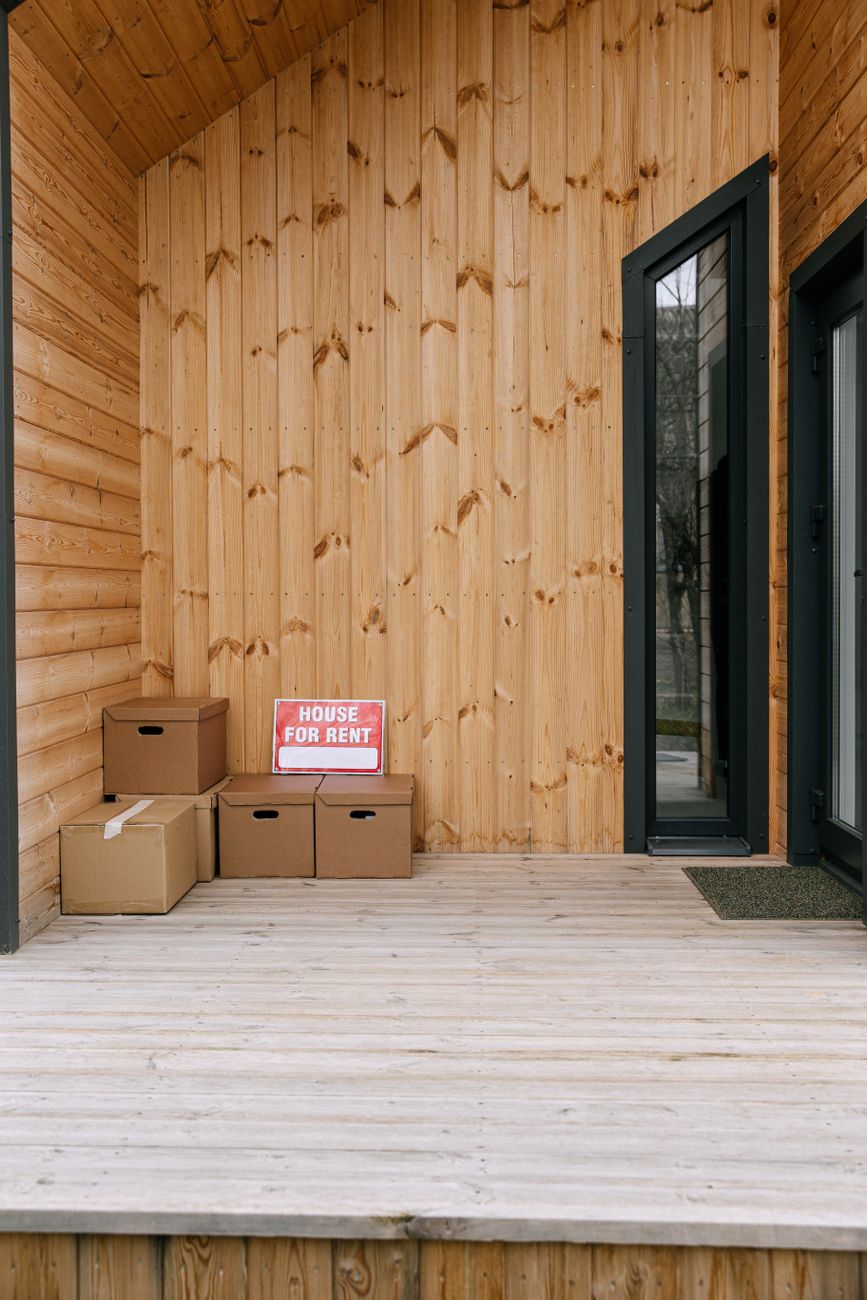
When I founded PEER Homes, I imagined myself spending a great deal of time thinking about housing.
That prediction turned out to be correct.
Over the years I’ve thought about affordability, accessibility, sustainability, zoning, density, urban design, placemaking, transportation, community health, and the countless other factors that shape where and how people live. I’ve sketched conceptual developments, attended planning meetings, participated in housing discussions, and written more than a few articles exploring what better housing might look like.
What I did not anticipate was how much time I would eventually spend thinking about landlords.
Perhaps that’s because I never set out to become one.
Like many people who care about housing, I’ve always felt a certain tension around the idea of landlording. Not hostility, exactly. More a sense that housing occupies a morally unusual place in society. A home is not a luxury good. It is not a yacht, a sports car, or a vacation property. Housing sits near the base of Maslow’s hierarchy, alongside food, water, and safety. People need a place to live in the same way they need access to clean drinking water and adequate nutrition.
At the same time, housing is undeniably an investment. Houses are bought, sold, financed, inherited, improved, rented, and leveraged. Entire industries exist around the ownership and management of real estate. Millions of people build wealth through property ownership. Pension funds invest in housing. Banks finance housing. Cities depend on property taxes generated by housing.
The same building can simultaneously be a family’s home and someone else’s investment portfolio.
That duality is what makes housing so fascinating, and so difficult.
Lately, I’ve found myself confronting a practical reality. If PEER Homes is ever going to move beyond ideas and articles and architectural concepts, someone has to own the housing. A rental house. A duplex. Perhaps someday something larger.
And that someone might be me.
The realization has forced me to wrestle with a question I once assumed was much simpler than it actually is.
Can a landlord be ethical?
Not legally compliant.
Not profitable.
Not competent.
Ethical.
The more I think about it, the more I suspect we’re asking the wrong questions about housing ownership altogether.
Consider a grocery store.
Most of us accept that grocery stores earn profits. We understand that food must be transported, stocked, refrigerated, marketed, and sold. We recognize that investors expect returns and employees deserve wages. Yet most people would also recoil at the idea of a grocery store doubling the price of bottled water immediately after a natural disaster.
Why?
Because we intuitively understand that necessities occupy a different moral category than luxuries.
We do not object to profit itself. We object when profit appears disconnected from value and rooted instead in vulnerability.
Housing creates a similar tension.
A rental property can be evaluated through entirely financial terms. Purchase price. Net operating income. Vacancy rates. Capital expenditures. Cash flow. Return on investment.
There is nothing inherently wrong with any of those concepts. They are useful tools for understanding whether a property can remain financially viable over time.
But the language becomes strange when we remember what the numbers actually represent.
A vacancy rate is a family that moved away.
A rent payment is someone’s housing budget.
A maintenance expense may be a leaking roof over a child’s bedroom.
A spreadsheet captures important information, but it does not capture the whole story.
This is where many housing debates become frustrating. People often appear to be arguing about the same thing when, in reality, they are talking about entirely different versions of housing.
One person sees an asset.
Another sees a home.
Both are correct.
The challenge is that neither perspective is complete on its own.
Historically, ownership carried obligations as well as privileges. Across many cultures and eras, landowners were expected to maintain roads, provide protection, support local institutions, or otherwise contribute to the communities in which they held property. Modern societies have largely separated ownership from many of those responsibilities. Today, we tend to think about property primarily in terms of rights: the right to buy, sell, develop, improve, lease, or exclude.
Those rights matter. They are an important part of a functioning economy.
Yet housing continues to nag at us because it resists being reduced entirely to rights.
Something about housing invites questions of responsibility.
What do owners owe the communities in which they operate?
What obligations accompany the privilege of collecting rent from another human being?
What responsibilities arise when someone else’s stability depends, at least in part, on your decisions?
These are not questions that appear on a balance sheet.
That may be precisely why they matter.
A few years ago, I visited an orchard that had been planted decades earlier. Many of the trees were producing fruit for people who had never met the individuals who planted them. The farmer who established the orchard understood something important: some investments only make sense when viewed across generations.
An orchard is not a short-term enterprise. You plant trees knowing that others will enjoy much of the harvest.
I’ve begun wondering whether housing ownership might benefit from a similar perspective.
Imagine inheriting an apartment building with one unusual condition attached. You are forbidden from selling it. Your children cannot sell it. Your grandchildren cannot sell it. The property will remain under your family’s stewardship for the next hundred years.
How would that change your decision-making?
Would you still choose the cheapest materials available?
Would you defer maintenance to improve next year’s financial performance?
Would maximizing short-term rent become the primary objective?
Or would you begin thinking differently?
You might pay more attention to durability. You might care more about tenant retention. You might invest more heavily in maintenance, landscaping, and community relationships. You might think not in quarters or fiscal years, but in decades.
The thought experiment is revealing because many ethical housing practices begin to look remarkably similar to good long-term business practices.
Residents who feel respected tend to stay longer.
Well-maintained properties tend to retain value.
Stable neighborhoods tend to remain desirable.
Trust tends to compound.
Stewardship and sustainability are often allies.
This realization has gradually shifted how I think about PEER Homes.
When I first created the organization, I imagined housing primarily through the lens of design and policy. I was interested in accessibility, sustainability, affordability, and community development. Those interests remain. But increasingly I find myself drawn toward a different question.
What if ownership itself could be practiced differently?
Not perfectly.
Not heroically.
Not in a way that eliminates every tension or contradiction.
Simply differently.
What if the goal of housing ownership were not maximum extraction but long-term stewardship?
What if success were measured not only by financial returns, but also by the quality, stability, and accessibility of the housing being provided?
What if profitability and purpose were viewed not as enemies, but as partners?
I don’t pretend these questions are easy. Housing is expensive. Maintenance costs are real. Insurance premiums rise. Roofs wear out. Investors deserve returns. Economic realities cannot be wished away.
Nor should they be.
The challenge is not choosing between idealism and practicality. The challenge is integrating them honestly.
That, at least, is the experiment PEER Homes hopes to pursue.
There is an old saying that we shape our buildings and afterward our buildings shape us. Less often discussed is the possibility that ownership works the same way.
We imagine that we own property. Yet over time, property exerts its own influence on us. It rewards certain behaviors, encourages certain habits, and tempts us toward particular ways of thinking. A rental house can become a source of stewardship, community stability, and pride. It can also become a line item on a spreadsheet, a vehicle for extraction, or an abstraction disconnected from the lives unfolding within its walls.
The building itself doesn’t determine which path we take.
The owner does.
As I think about the future of PEER Homes, I find myself less interested in whether landlords are good or bad. History has supplied examples of both. The more interesting question is whether it is possible to build a housing model that recognizes two truths at the same time: that homes are investments and that homes are homes.
That tension may never disappear. Perhaps it shouldn’t. Some tensions are useful because they force us to remain humble. They remind us that the world is more complicated than our preferred ideologies and that human needs rarely fit neatly into political categories.
I don’t yet know exactly what an ethical landlord looks like in practice.
But I suspect it begins with viewing a property not merely as something one owns, but as something one holds in trust for a little while before passing it on.

